
Blog

We throw the phrase "emotional intelligence" around as if everyone agrees on what it means. Most of the time we use it as a compliment, she is so emotionally intelligent, or as a quiet criticism, he has no emotional intelligence at all. But underneath the buzzword is something specific, well studied, and genuinely learnable. And in a world changing as fast as this one, it may be the most practical skill set you can build. Learn more
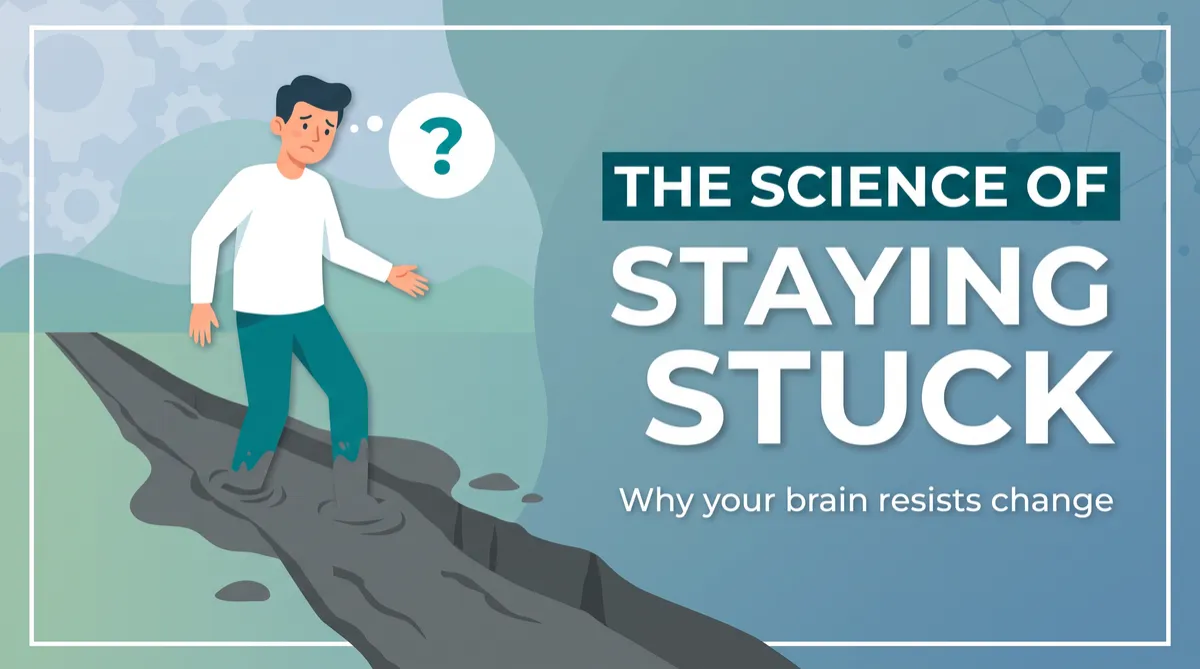
I have spent more than twenty years watching capable, accomplished people stay stuck in the exact same place, year after year. Not because they lacked information. Not because they weren't smart enough, or hadn't read the book, or hadn't heard the advice a hundred times. They stayed stuck for a reason that is both more frustrating and more hopeful than a lack of willpower. And once you understand it, a lot of things about your own life start to make sense. Learn more
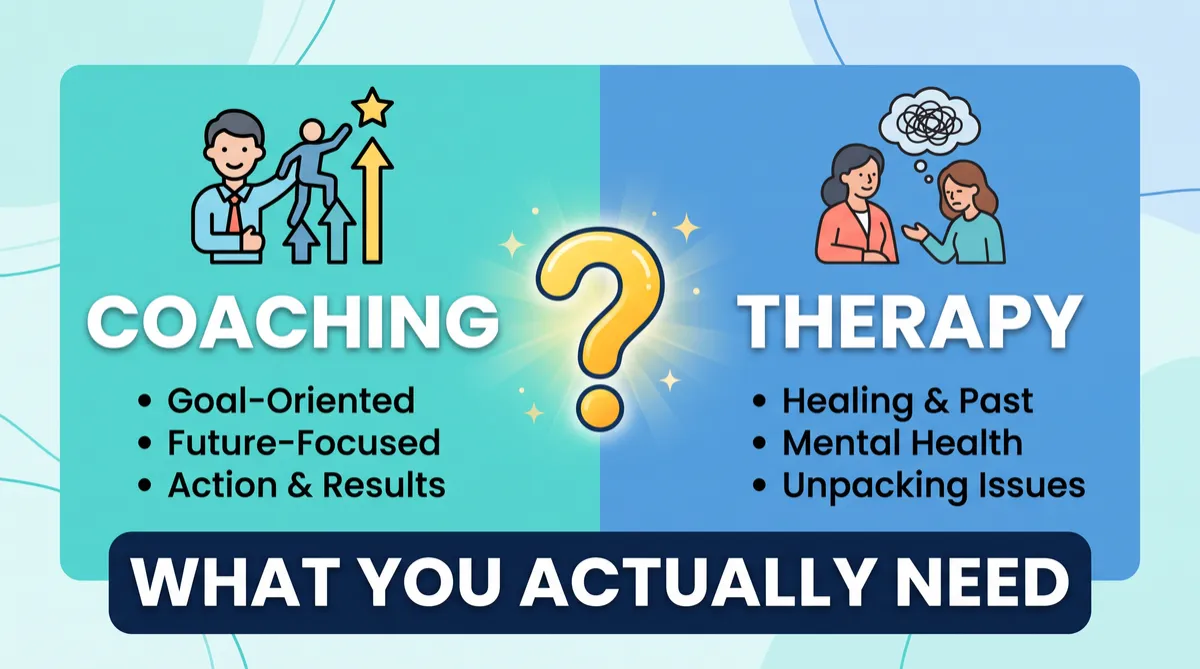
If you are the kind of woman who has read the books, done the therapy, listened to the podcasts, and still catches yourself thinking "so why am I still stuck in this one area," you have probably wondered whether coaching is the missing piece. Good instinct. But before you hand anyone your money and your inner life, you deserve a clear, honest answer to a question most of the industry keeps deliberately blurry: what is the actual difference between coaching and therapy, and which one do you need right now? Learn more
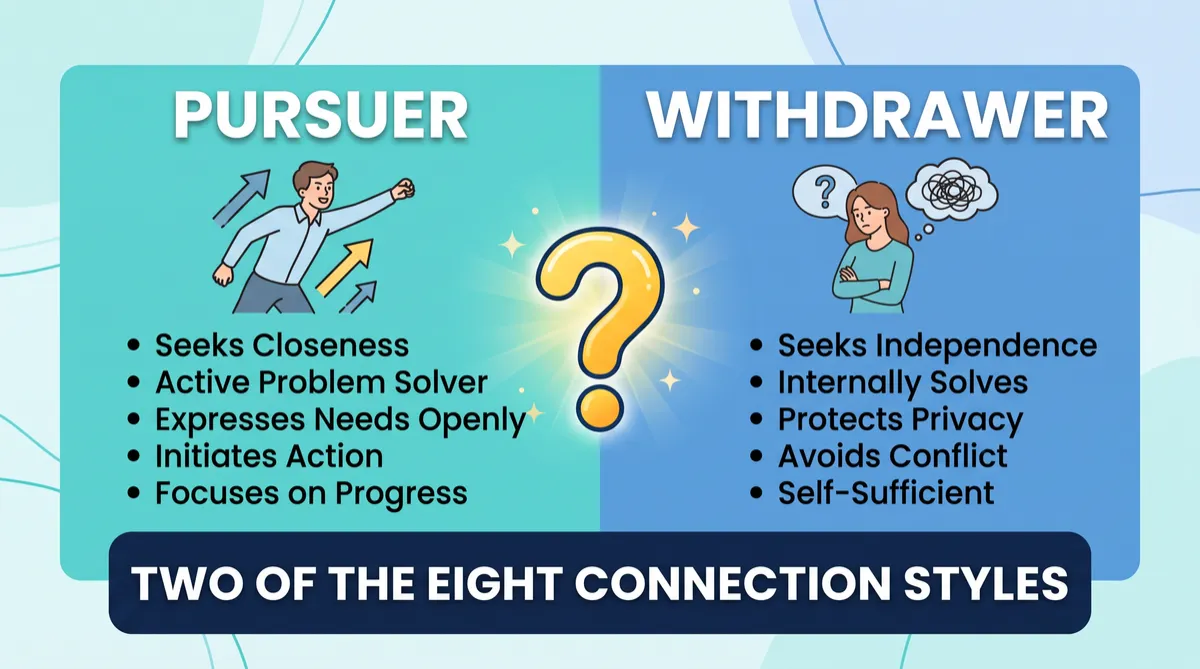
In the 1970s, family therapist Thomas Fogarty described what he called the pursuer and the distancer: one partner moves toward the other for connection, and the other moves away to get space (Fogarty, 1976). Researchers later studied the same loop as the demand and withdraw pattern. One of the most useful findings is that who pursues often depends on whose concern is on the table (Christensen & Heavey, 1990). The role isn't fixed in your personality. It shows up in the relationship.
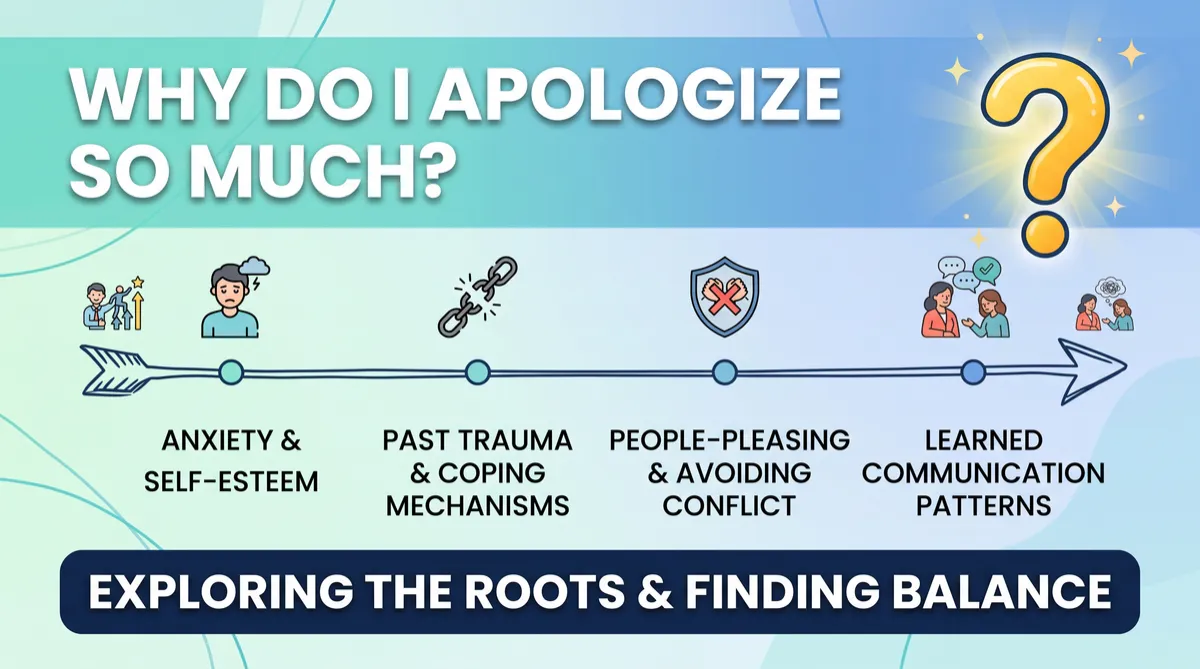
I The one-line no and the four-paragraph no
At work, you can turn down a vendor in one sentence. "Thanks for the proposal. We're going a different direction." You hit send and don't think about it again. Then your sister asks if you're coming to Sunday dinner, and you're tired, and you want one quiet Sunday. The text you write starts with "I'm so sorry." It explains the week you've had. It mentions the project deadline as backup. It apologizes again. It offers to bring dessert next time, or host next month, or call Mom on Tuesday. It's four paragraphs long, and it ends with "I hope that's okay!!"
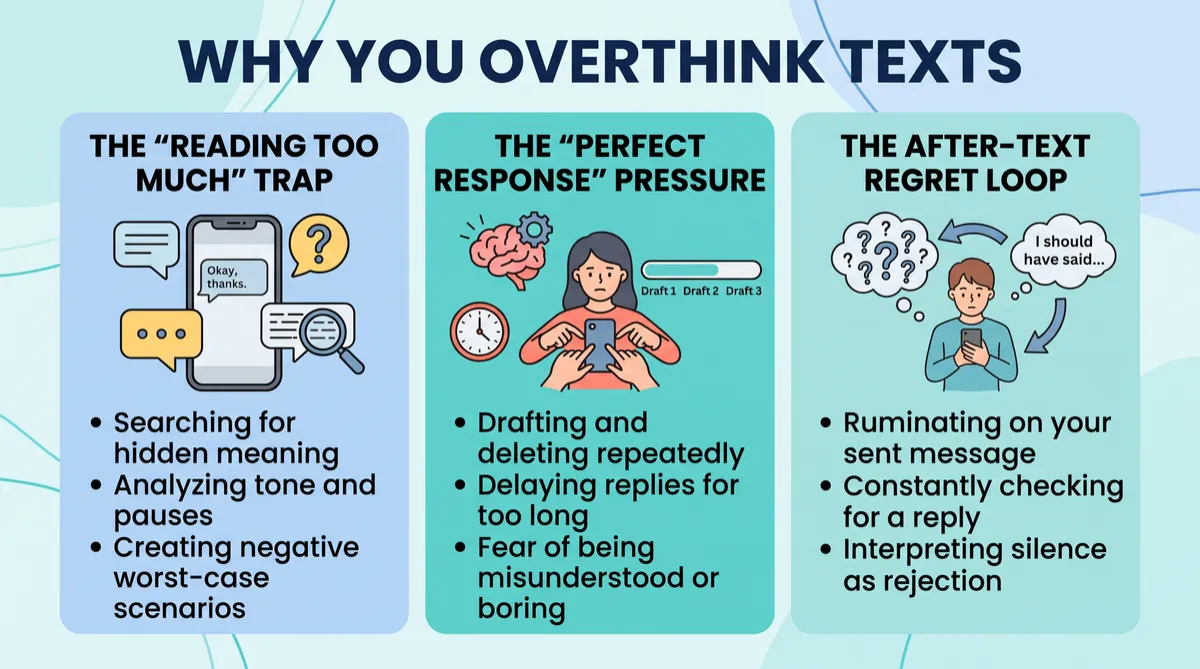
It's 10:40 at night. You spent the day making decisions that mattered. You ran the meeting, calmed the client, solved the problem nobody else wanted to touch. Then he texted back one letter. "k."
Forty minutes later you are still on the couch with your phone. You've reread the thread twice. You've checked whether your last message sounded cold. You've drafted a reply, deleted it, drafted a lighter one, and deleted that too. You've decided he's annoyed, then decided he's just tired, then decided you can't know, which feels worst of all.
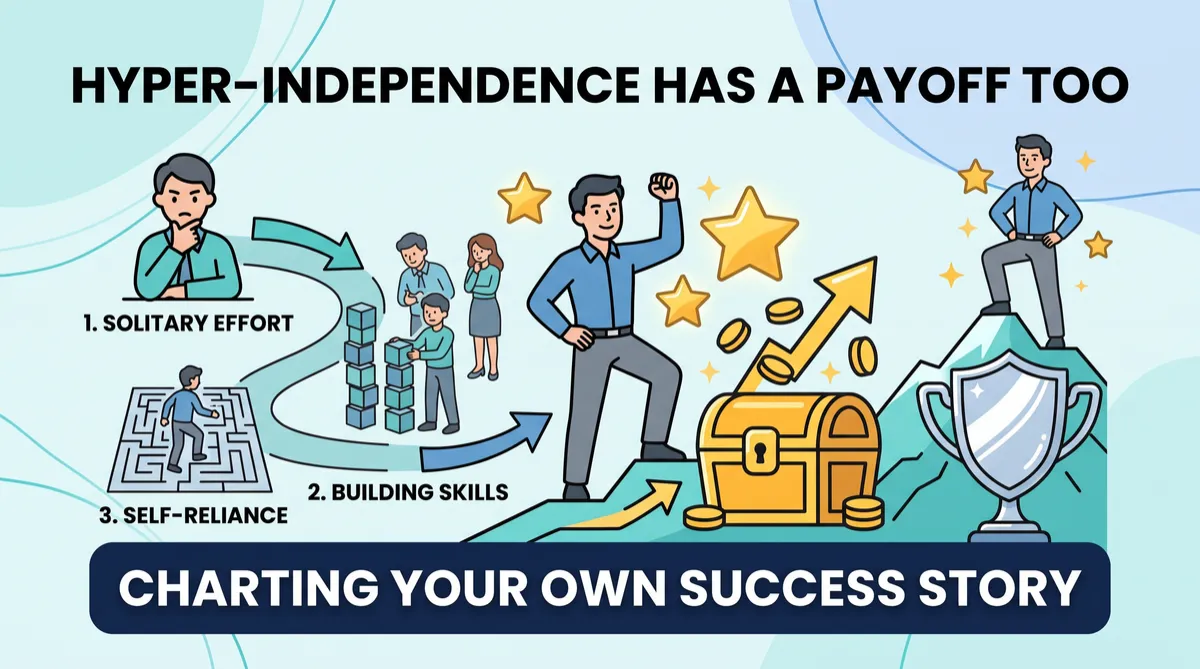
Last spring she moved apartments by herself. Not because nobody would help. She has friends. Good ones. Two of them have trucks. She just didn't ask. Asking felt worse than carrying the boxes. Asking meant owing someone, being a bother, and maybe hearing "I'd love to, but that weekend's tough." She rented a dolly, did it in four trips, and told everyone about it afterward, lightly, as a funny story about her sore back.
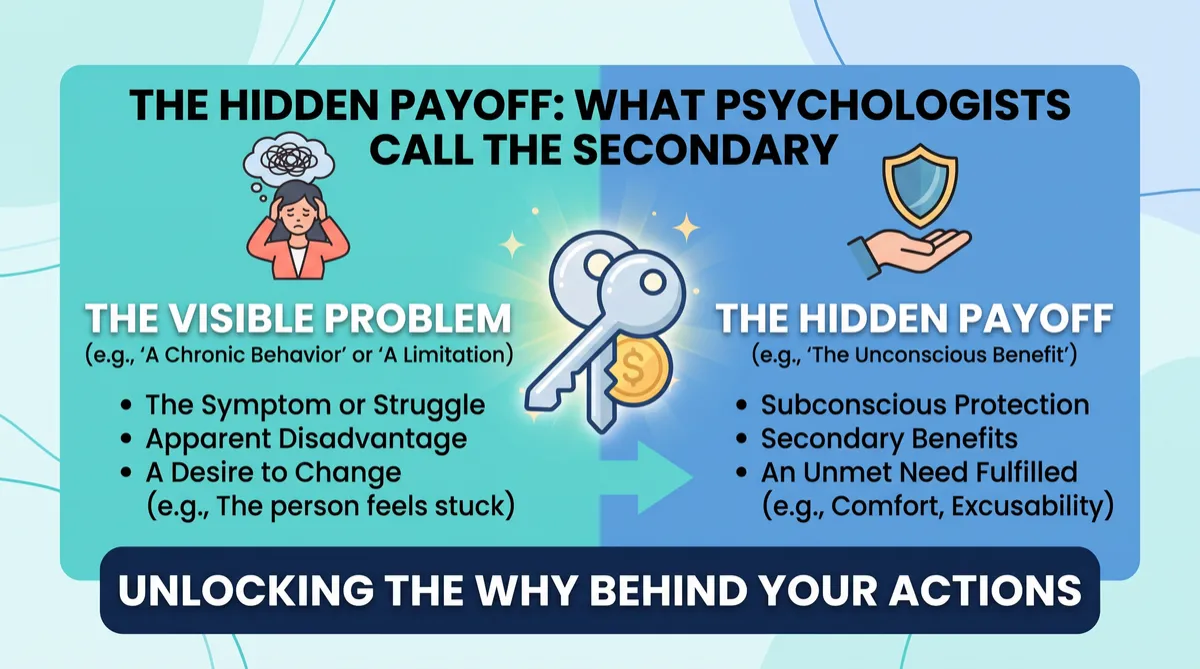
The hidden payoff: what psychologists call secondary gain You're not stuck. You're getting paid. That's the line at the center of my Hidden Payoff series, and it's the one that gets the most messages. Some of them say, "That's exactly it." Others ask a sharper question: "Is that a real thing, or just a good line?"
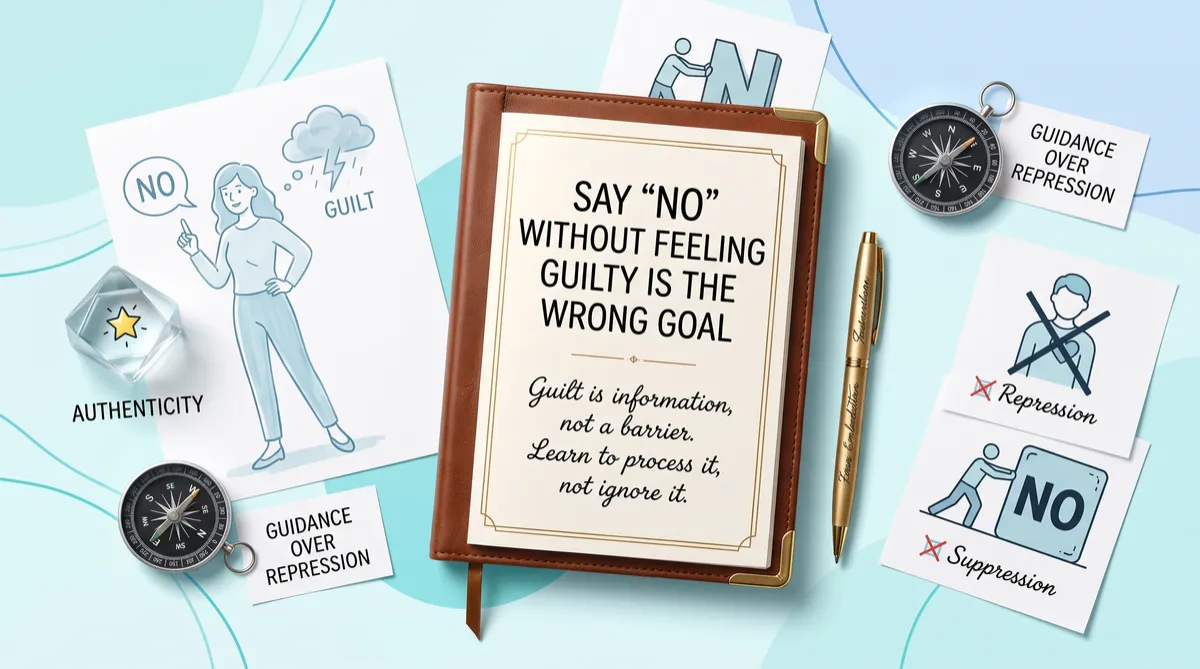
Picture this. She told her mother-in-law no. For the first time in eleven years, she wasn't going to host Thanksgiving. She said it kindly and clearly, on the phone, on a Sunday afternoon. Forty minutes later she was typing: "I'm so sorry about earlier. I've been thinking about it, and if it would really help, I could still do the desserts and maybe the..." She's an attorney. She negotiates for a living. She holds her position in rooms full of people who want her to fold. One no to someone she loves, and the guilt pulled her back across the line within the hour.
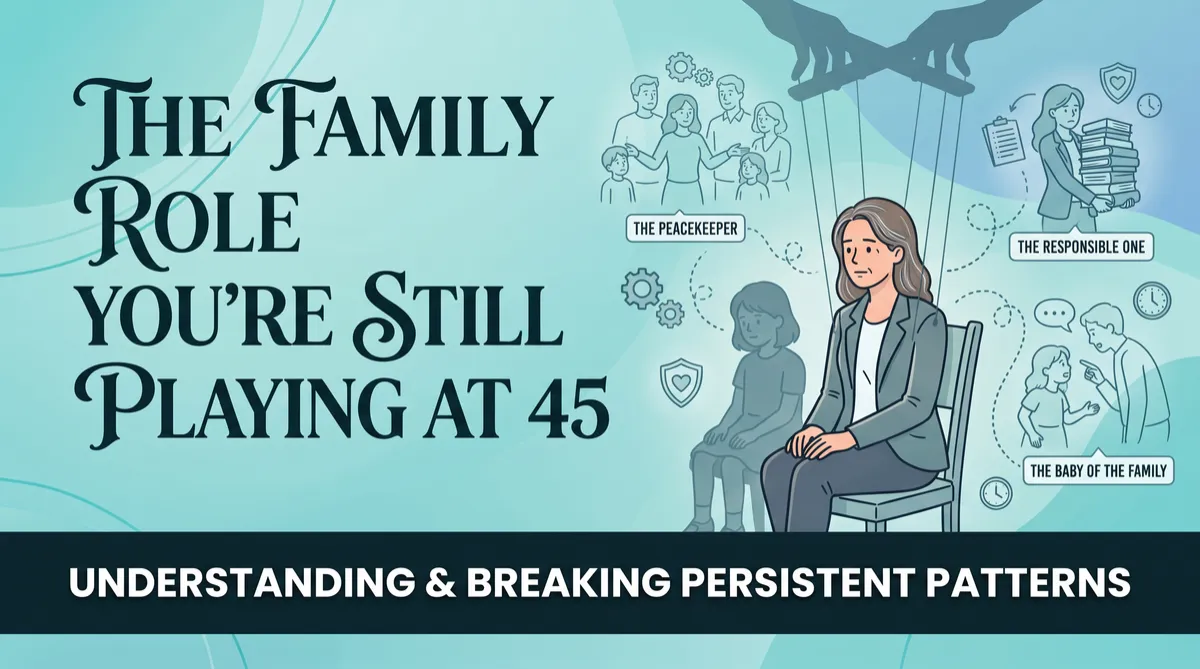
Picture an operations VP at a regional health system. She runs budgets, people and crises. She's also the person who has planned every family holiday since she was in her twenties.
Nobody asked her to. Nobody had to. She was the responsible one at nine, when she made sure her younger brother had lunch packed and her mom's mood was read correctly before anyone walked in the door. Thirty-seven years later, she still sends the group text in October: "Okay, who's bringing what?"
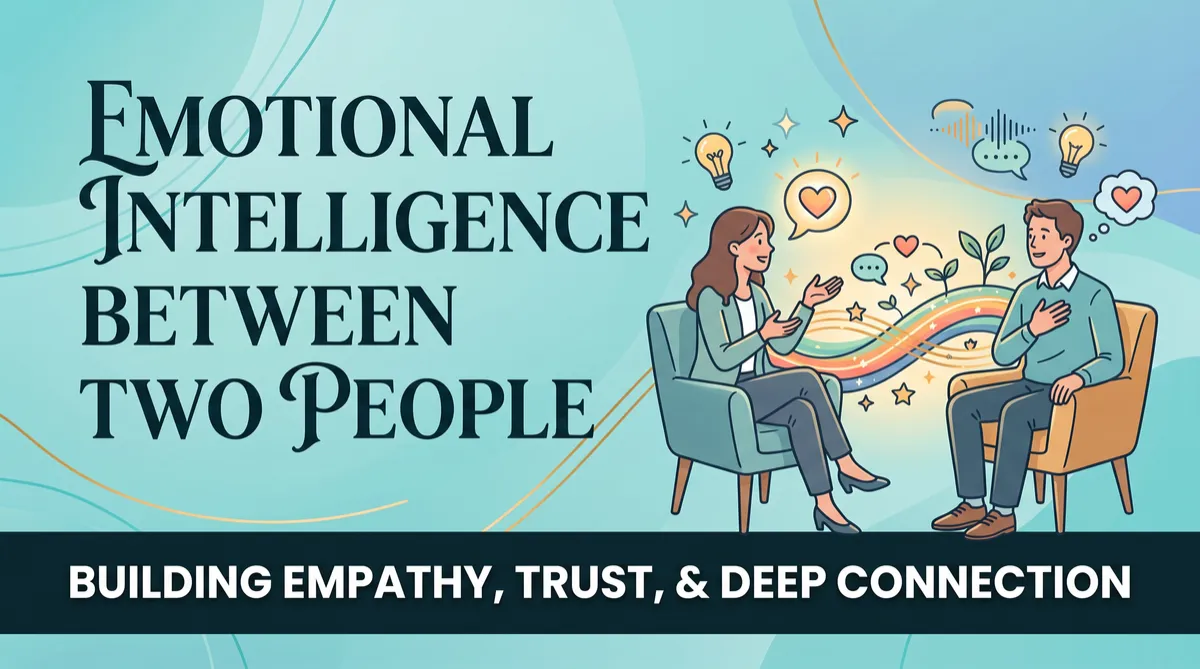
Picture a sales leader who has sat through two emotional intelligence trainings at work. She can read a client's hesitation from across a conference table. She coaches her team through conflict. She knows the vocabulary.Then her husband raises his voice about the credit card bill, and she goes completely flat. No words. No read on the room. Just a wall, and a strong urge to leave.Afterward, she thinks: "I literally teach this."

Emotional intelligence coaching for self-aware people to break free from emotional patterns, based in Columbus, Ohio, available online everywhere.
Phone: (475) 244-7477
Email: [email protected]
Want the good stuff in your inbox?
Get free emotional intelligence practices each month. Join Authentic Self Insights.


Copyright 2026 -OH - All Rights Reserved.